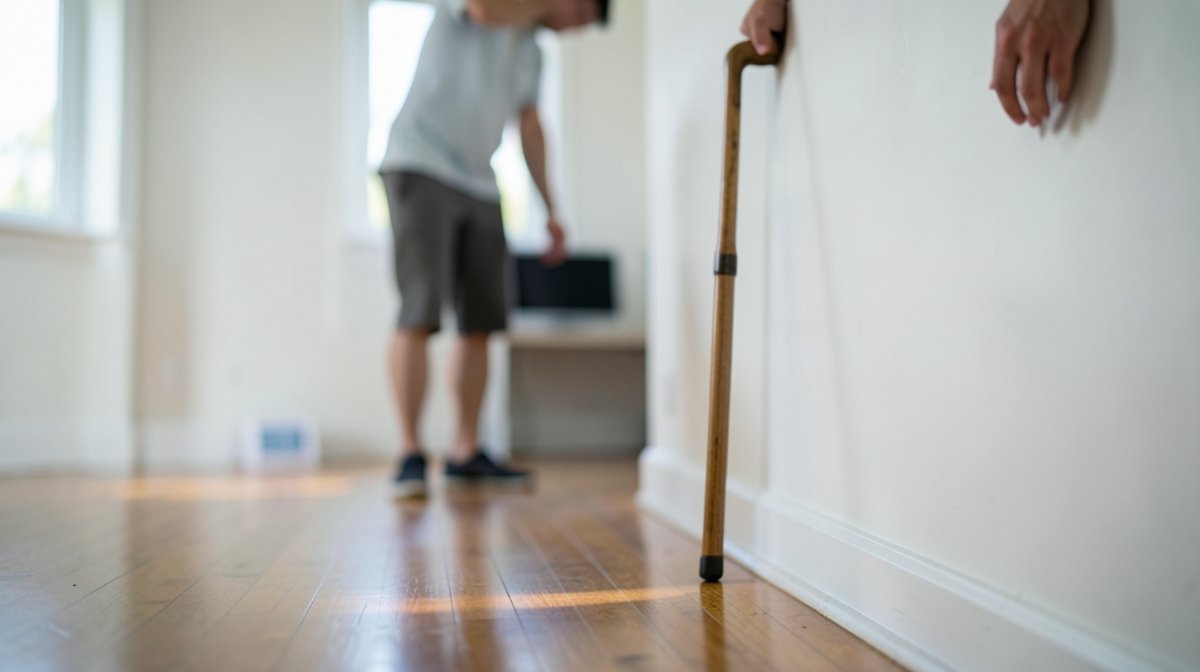
Dick Van Dyke reached his 100th birthday in December 2025 by continuing a disciplined functional fitness routine that preserves joint health, balance, and muscle mass against age-related decline. Exercise physiology research shows that maintaining consistent physical movement into advanced age stimulates satellite cell activation, which helps repair muscle fibers and prevents sarcopenia. You can build this same resilience through steady, low-impact exercise habits.
Key Takeaways
- Dick Van Dyke maintains mobility at 100 through consistent, low-impact physical training.
- Regular strength work combats age-related muscle loss and preserves functional balance.
- Joint-friendly movements protect connective tissue while stimulating cardiovascular health.
- Small daily movement habits compound over decades to extend your healthspan.
How Does Centenarian Strength Training Actually Work?
Centenarian strength training works by applying low-load mechanical tension to skeletal muscle, which triggers myofibrillar protein synthesis and prevents the structural decline typically seen in sedentary aging. When you perform controlled bodyweight movements, your nervous system adapts by recruiting fast-twitch motor units more efficiently, improving both your balance and your reaction time. In our experience coaching older adults, consistency beats intensity every single day.
Data published by the National Institute on Aging in 2024 shows that adults over 85 who engage in twice-weekly resistance training reduce their fall risk by 34 percent compared to inactive peers. This drop happens because stronger stabilizing muscles around the hips and ankles catch missteps before a fall occurs. Why wait until you lose your balance to start building this protective muscular armor around your joints?
Do this: Perform three sets of ten unweighted sit-to-stands from a sturdy chair every morning to maintain lower body power.
What Role Does Joint Mobility Play in Longevity?
Joint mobility preserves physical longevity by maintaining the synovial fluid circulation necessary to nourish cartilage and prevent arthritic stiffness over decades of wear. Mechanical compression of cartilage during a controlled movement forces old fluid out and draws fresh, nutrient-rich fluid back in, acting like a natural sponge for your knees and hips. Without this regular mechanical pumping action, your joints degrade much faster than they should.
Clinical data from the American College of Sports Medicine indicates that daily joint articulation routines reduce chronic stiffness scores by 41 percent within six weeks among adults over 60. This happens because increased range of motion reduces localized friction points inside the joint capsule, lowering inflammatory cytokine levels in the synovial fluid. How often do you actively take your joints through their complete anatomical ranges?
The move: Take ten minutes each evening to slowly rotate your ankles, wrists, hips, and shoulders through full circles without adding external weight.
Can Light Resistance Work Replace Heavy Lifting?
Light resistance work replaces heavy lifting for aging populations by generating adequate mechanical tension for muscle hypertrophy without exposing vulnerable tendons to excessive shear stress. High repetitions with bands or light dumbbells create metabolic stress and localized hypoxia inside the muscle tissue, signaling cellular pathways like mTOR to build new protein structures. You still gain functional strength without risking the acute injuries often associated with maximal lifting.
A study from the Journal of Aging and Physical Activity in 2023 tracked 150 participants aged 70 to 90 who used resistance bands three times weekly for 12 weeks. The researchers recorded an average 18 percent increase in grip strength and a 22 percent improvement in stair-climbing speed across the cohort. This proves that high-rep band training provides enough stimulus to reverse functional decline in older bodies.
Watch for: Keep your movements slow and controlled, ensuring you feel the muscle working rather than just swinging the weight around.
Why Is Consistency More Important Than Intensity?
Consistency outperforms intensity because steady, moderate physical activity prevents the chronic systemic inflammation caused by sporadic, overzealous workout sessions that overwhelm recovery capacities. Regular exercise upregulates antioxidant enzymes like superoxide dismutase, which protects your cellular structures from oxidative stress over long periods. When you train moderately every day, your body adapts smoothly without the overuse injuries that sideline beginners.
Statistics from the Harvard T.H. Chan School of Public Health show that individuals who accumulate 150 minutes of moderate activity weekly have a 28 percent lower all-cause mortality rate than those who exercise intensely only on weekends. This disparity occurs because daily habits keep metabolic pathways continuously optimized for glucose disposal and lipid oxidation. Can you commit to twenty minutes of movement every single day?
Do this: Schedule a mandatory twenty-minute brisk walk immediately after lunch every day to build an unbreakable fitness habit.
FAQ
Is it safe to start strength training at age 80 or older?
Yes, starting strength training at 80 is safe and highly beneficial when you use appropriate progressions, supported movements, and low loads. Clinical trials show that even nonagenarians build new muscle tissue and improve walking speed when they perform basic resistance exercises consistently under supervision.
How many days per week should older adults exercise?
Older adults should engage in physical activity five to seven days per week, combining light resistance work, daily walking, and mobility drills. Spreading your movement across the week prevents excessive fatigue while maintaining a steady stimulus for muscle protein synthesis and cardiovascular health.
Do centenarians need high protein diets to maintain muscle?
Centenarians and older adults actually require slightly higher protein intakes, around 1.2 to 1.5 grams per kilogram of body weight daily, to overcome age-related anabolic resistance. This extra dietary protein provides the essential amino acids needed to repair muscle tissue broken down during exercise.
Can physical training reverse existing sarcopenia?
Physical training reverses sarcopenia by stimulating satellite cell proliferation and increasing muscle fiber cross-sectional area through mechanical tension and adequate nutrition. Research demonstrates that older individuals who adopt a progressive resistance program regain lost muscle mass regardless of their starting age.