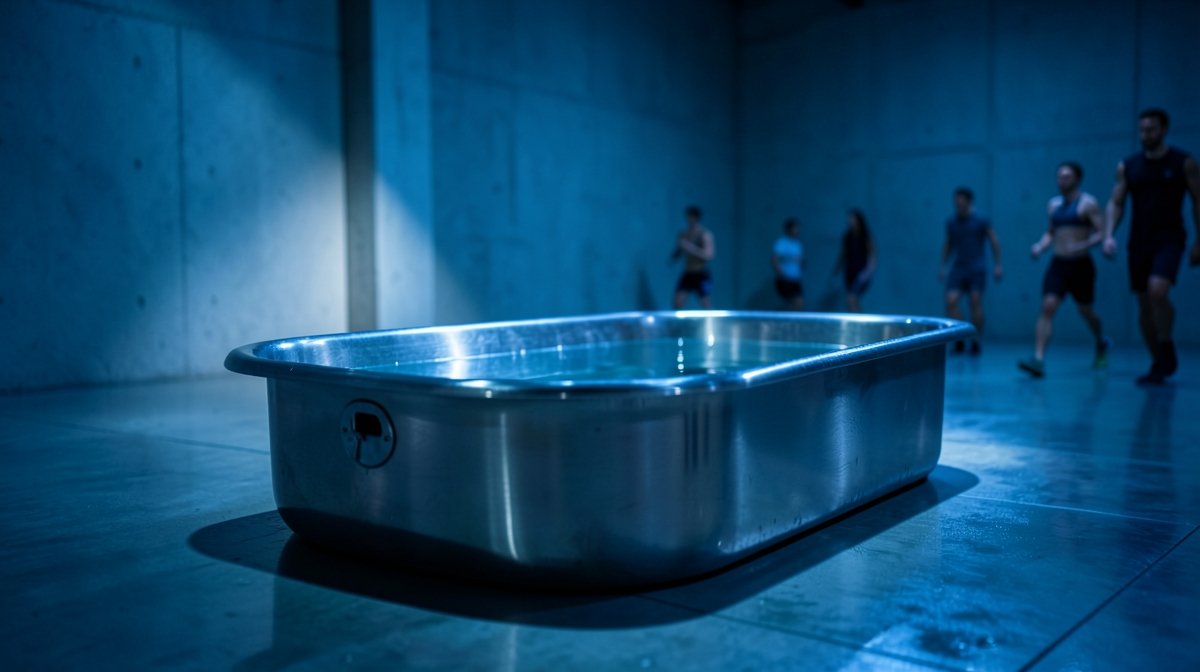
Immersing your body in 10-degree Celsius water for 10 minutes drops intramuscular temperature by up to 8 degrees and triggers rapid peripheral vasoconstriction. This hydrostatic pressure and thermal shift drive metabolic waste away from fatigued muscle fibers. Getting the timing wrong, however, suppresses downstream hypertrophic signaling pathways like mTOR.
Key Takeaways
- Submerge at 10 to 15 degrees Celsius for 10 to 15 minutes to maximize recovery.
- Delay cold exposure by at least 4 hours after resistance training to preserve hypertrophy.
- Utilize immediate cold immersion after high-intensity endurance bouts to reduce acute systemic inflammation.
What Temperature and Duration Yield the Best Recovery Markers?
Research consistently shows that water temperatures between 10 and 15 degrees Celsius (50 to 59 degrees Fahrenheit) for 10 to 15 minutes provide the optimal therapeutic window. Shorter durations fail to cool core tissue adequately, while excessively freezing water prompts sudden neuroendocrine shock without offering additional muscular recovery benefits.
A 2016 meta-analysis by sports medicine researchers evaluated 36 randomized trials on cold water immersion. They discovered that 11 to 15 minutes of continuous soaking reduced delayed-onset muscle soreness by roughly 20 percent compared to passive rest.
Hydrostatic pressure plays an equal role alongside thermal drop. When you submerge to the clavicles, water pressure forces blood toward the thoracic cavity, increasing stroke volume and accelerating systemic clearance of creatine kinase.
Recovery rates do not improve simply by staying in colder water for longer sessions. Clinical evidence shows that cellular benefits plateau after 15 minutes, with additional time raising hypothermia risks without improving functional repair markers. We’ve found that setting a chiller to 11 degrees Celsius provides reliable vasoconstriction without excessive shivering.
- Water temperature check: Calibrate your immersion tank to 11 degrees Celsius for a 12-minute baseline exposure.
How Does Cold Water Immersion Influence Hypertrophy and Strength Gains?
Post-exercise cold plunging blunts muscle hypertrophy if applied immediately after resistance training by downregulating p70S6K and the mammalian target of rapamycin (mTOR) pathway. This reduction in satellite cell activity and ribosome biogenesis reduces long-term muscle fiber cross-sectional area growth by up to 20 percent over 12 weeks.
A landmark 2015 study by Roberts and colleagues demonstrated that cold plunges taken within 10 minutes of lifting suppressed amino acid transport and protein synthesis. The acute blunting of cellular inflammation directly interfered with the structural remodeling needed for larger, stronger contractile units.
When your training objective centers on maximum strength or lean mass accumulation, you must allow natural acute inflammation to run its course. The macrophage response immediately following mechanical tension delivers essential growth factors directly into damaged myofibrils.
Strength athletes must carefully balance soreness reduction against long-term muscle growth during heavy blocks. Spacing immersion sessions several hours away from resistance training prevents downstream signaling disruption while still delivering autonomic benefits.
- Hypertrophy timing window: Wait at least 4 to 6 hours after lifting weights before entering cold water.
When Should Endurance Athletes Prioritize Post-Workout Cold Exposure?
Endurance athletes should plunge within 30 minutes of high-volume running, cycling, or tournament play to accelerate core temperature cooling and mitigate systemic oxidative stress. Unlike resistance training, cold exposure enhances mitochondrial biogenesis in aerobic capacity through increased peroxisome proliferator-activated receptor gamma coactivator-1 alpha (PGC-1a) gene expression.
Distance runners logging 50 miles weekly accumulate massive joint impact and tissue breakdown. Immersing the lower body immediately after tempo workouts suppresses excessive neutrophil infiltration, which shortens perceived fatigue intervals by 24 to 48 hours according to clinical trial data.
The cold shock stimulates thermal receptor protein activation, driving uncoupling protein-1 release and promoting mitochondrial density. This metabolic adaptation enhances oxygen utilization during prolonged submaximal endurance events.
In our experience, triathletes running double sessions recover faster when cold exposure occurs between their morning track workout and evening swim. The immediate reduction in core temperature restores autonomic baseline status rapidly.
- Post-cardio immersion: Plunge for 10 minutes within 30 minutes of completing high-impact aerobic sessions.
What Breathing and Autonomic Protocols Prevent Cold Shock Response?
Controlled nasal breathing and extended diaphragmatic exhalations suppress the sympathetic cold shock response within 60 seconds of initial water immersion. Uncontrolled hyperventilation spikes arterial pressure and plasma cortisol, whereas deliberate pacing activates parasympathetic tone through vagus nerve stimulation to stabilize your resting heart rate.
When skin thermoreceptors detect water below 15 degrees Celsius, your sympathetic nervous system initiates an involuntary gasping reflex. You can override this adrenergic spike by executing slow four-second nasal inhalations paired with six-second exhales before stepping into the water.
Keep your hands and chest submerged while keeping your neck neutral. Moving water creates forced convection, which strips away the boundary thermal layer of warm water insulating your skin, so staying still keeps your autonomic stress manageable.
Deliberate focus measurably alters physiological markers during the initial temperature shock. Directing visual attention to a single fixed point while counting respiratory cycles keeps your prefrontal cortex engaged and dampens panic signals.
- Breath stabilization cadence: Inhale for 4 seconds and exhale for 6 seconds throughout the first two minutes.
FAQ
Can I take a warm shower immediately after cold plunging?
Avoid taking a hot shower immediately after cold water immersion. Rewarming passively forces your vascular network to dilate naturally, prolonging the metabolic and anti-inflammatory effects. Wait at least 30 minutes before exposing your body to hot water or saunas.
How many times per week should I cold plunge for recovery?
Two to four sessions per week totaling 11 minutes of cumulative exposure provide optimal physiological adaptations without causing chronic adrenal strain. Spreading this duration across three separate sessions maintains autonomic resilience while keeping physical recovery metrics predictable across rigorous training schedules.
Does cold plunging burn significant amounts of body fat?
Cold immersion increases acute energy expenditure through non-shivering thermogenesis in brown adipose tissue. However, this caloric burn accounts for less than 100 extra calories per session. Cold water immersion functions primarily as a recovery tool rather than a standalone fat loss strategy.
Should I plunge before or after a training session?
Plunge after workouts rather than before them. Cold immersion drops muscle temperature and nerve conduction velocity, which impairs contractile force production and increases injury risk during heavy lifting. Pre-cooling should only occur in extreme heat environments to manage thermal strain.
Adopting a structured cold plunge routine transforms post-workout management from an unpredictable trial into a calibrated recovery tool. Aligning exposure temperatures, session durations, and strategic post-lifting delays ensures you protect your hard-won athletic adaptations while keeping central nervous fatigue at bay.
Subscribe to our newsletter for weekly science-backed protocols.